
KP Govt Announces Tax Relief For One Month
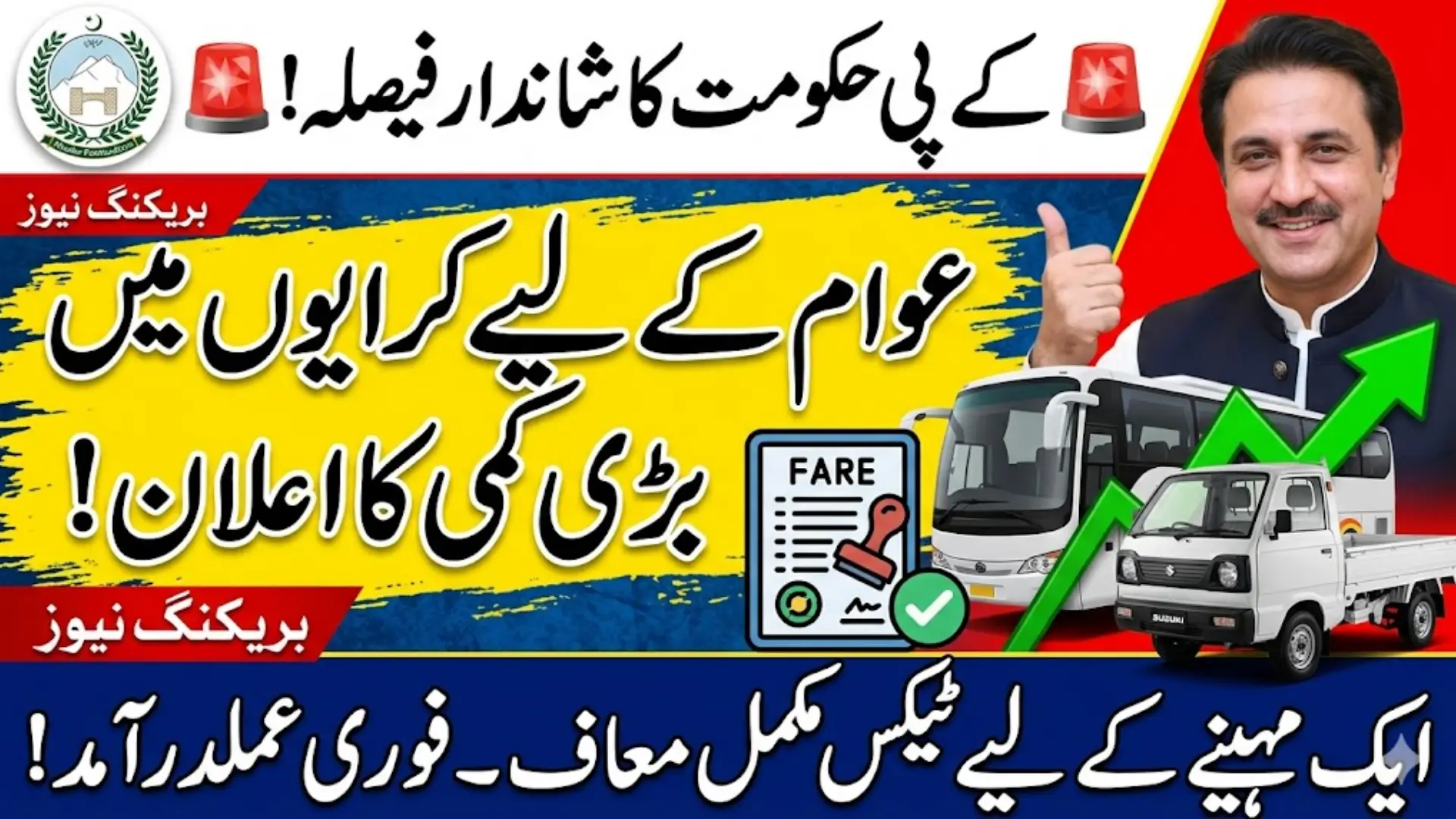
KP Govt Announces Tax Relief For One Month Khyber Pakhtunkhwa government has announced a major relief package for the transport sector by removing key taxes for one month. This decision comes at a time when inflation and rising fuel prices have made daily travel difficult for ordinary citizens. For many people who rely on public transport for work, education, and daily needs, even a small reduction in fares can bring real financial relief. From what has been observed on the ground, passengers have been demanding such steps for a long time, and this move is being seen as a practical response by the government.
This decision was taken during a high-level meeting chaired by the Commissioner of Peshawar Division, where officials reviewed the transport situation across districts. The main focus was not just to give relief to transporters, but to ensure that the benefit is directly transferred to passengers. The government has clearly stated that this is not just a policy announcement but a strictly enforced decision, with field monitoring already underway in different areas.
You Can Also Read: GWM Tank 500 Price in Pakistan Reviews
Quick Overview of the New Relief Decision
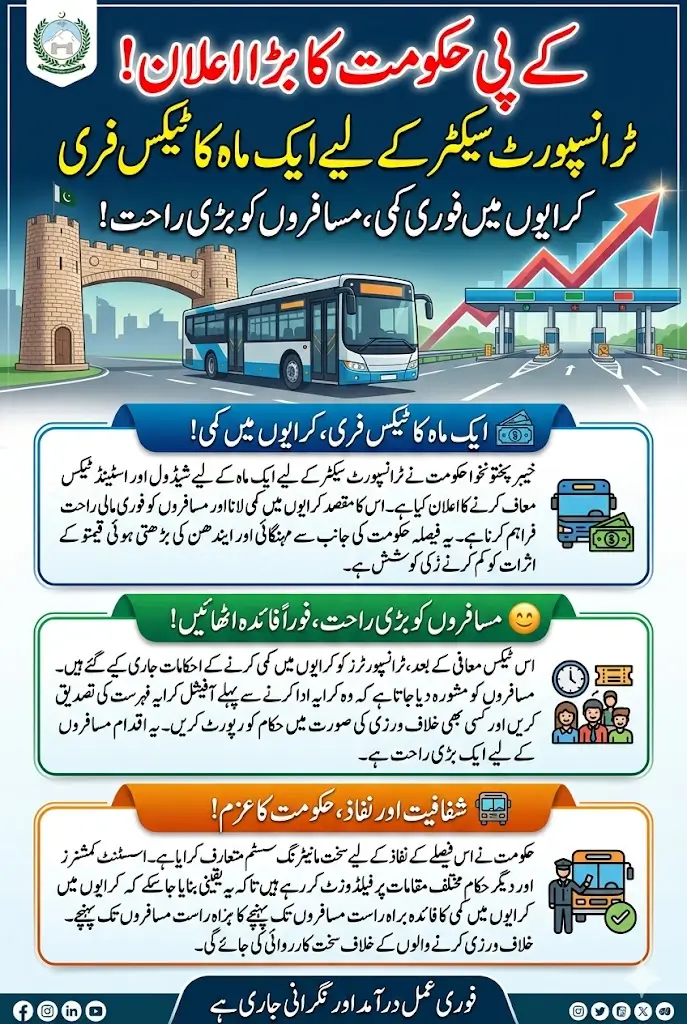
The provincial government has temporarily waived two important taxes for transporters across all districts of KP. The purpose behind this step is to control transport fares and provide immediate financial relief to the public. Officials have also started field visits to ensure that this relief is not limited to paper announcements but is visible in actual fare reduction.
From a journalist’s observation, such measures often fail due to weak implementation, but in this case, the administration appears more active. Monitoring teams have been deployed, and clear instructions have been issued to district authorities to ensure compliance.
- One-month tax waiver announced across KP
- Applies to all types of public transport
- Immediate implementation ordered
- Focus on reducing passenger fares
- Monitoring teams already active
You Can Also Read: Gilgit-Baltistan Motorway Project Route
What Taxes Have Been Removed?
Under this relief package, the government has waived schedule tax and stand tax for a period of one month. These taxes are part of the operational costs of transporters, and when they are removed, the overall cost of running vehicles decreases. In normal situations, transporters include these costs in passenger fares, which increases the burden on the public.
With the removal of these taxes, the government expects transporters to reduce fares accordingly. This is why strict instructions have been issued to ensure that transporters do not keep the benefit to themselves. The decision applies uniformly across all districts, which means passengers in both urban and rural areas will benefit equally.
| Tax Name | Previous Status | Current Status | Duration | Expected Public Benefit |
|---|---|---|---|---|
| Schedule Tax | Applicable | Waived | 1 Month | Lower transport fares |
| Stand Tax | Applicable | Waived | 1 Month | Reduced station charges |
Main Objective Behind This Step
The main goal of this decision is to provide relief to the general public by reducing transport fares. In recent months, passengers have been facing continuous fare increases, especially on long routes and intercity travel. This has made daily commuting difficult for workers, students, and small business owners.
From ground reports, it is clear that fare control has been a major issue. By removing these taxes, the government is trying to balance the situation and bring fairness to the system. This step is also aimed at restoring public trust in the transport sector, where complaints about overcharging are common.
- Reduce burden on daily commuters
- Control unfair fare increases
- Ensure equal benefit across districts
- Improve public trust in transport system
You Can Also Read: Punjab Public Safety App Simple Steps
Instructions Issued to Transporters
Transporters have been clearly instructed to reduce fares immediately and pass the full benefit of the tax relief to passengers. The government has made it clear that partial reduction will not be accepted. Every transporter must follow the new fare structure as per official instructions.
During recent inspections, officials emphasized that strict action will be taken against those who do not comply. This includes fines and possible cancellation of permits. From what has been seen in previous cases, strict enforcement is the only way to ensure that such relief measures succeed.
- Immediate fare reduction required
- Full benefit must be passed to passengers
- Overcharging will lead to penalties
- Transport permits may be affected
Strict Monitoring System Introduced
To ensure proper implementation, the government has introduced a strong monitoring system. Assistant commissioners have been deployed in each district to check fares at transport stands and major highways. Their role is to physically verify that the new fare system is being followed.
This time, monitoring is not limited to offices. Officials are actively visiting locations, interacting with passengers, and checking fare lists. This on-ground approach increases the chances of success and reduces the possibility of violations.
- Three assistant commissioners assigned per district
- Regular inspections at bus stands
- Monitoring on highways and main routes
- Surprise checks to prevent violations
You Can Also Read: Change Profession Pakistani Passport
Role of Deputy Commissioners in Implementation
Deputy commissioners have been given direct responsibility to supervise the implementation of this decision. They have been instructed to personally monitor field operations and ensure that transporters follow the rules.
This step is important because local administration understands the real situation better. Their involvement ensures that problems are identified quickly and action is taken without delay. In many districts, DCs have already started visiting transport points to review the situation.
- Direct supervision by deputy commissioners
- Field visits to transport hubs
- Immediate action on complaints
- Coordination with monitoring teams
Display of Official Fare List Made Mandatory
The government has made it compulsory for transporters to display the official fare list on the front of their vehicles. This step is aimed at increasing transparency and helping passengers know the correct fares before starting their journey.
In many cases, passengers are unaware of official rates, which leads to overcharging. By displaying the fare list clearly, transporters will be held accountable, and passengers will feel more confident while paying fares.
- Fare list must be clearly visible
- Only government-approved rates allowed
- Passengers can easily verify charges
- Reduces chances of disputes
You Can Also Read: Pak Suzuki Bike Installment Plan Available
Areas Where Monitoring Has Been Increased
Special attention has been given to areas with high passenger traffic. These include bus stands, major highways, and intercity routes where overcharging complaints are more common. Officials have increased their presence in these areas to ensure strict compliance.
Recent visits to GT Road and motorway routes show that monitoring teams are actively working. This on-ground enforcement is necessary to make sure that the policy is implemented equally in all areas.
- Passenger bus terminals
- GT Road routes
- Motorway checkpoints
- Urban and rural transport points
You Can Also Read: NADRA Announced New B-Form Issuance System
Recent Inspections and Government Actions
The Commissioner of Peshawar Division has personally visited different transport locations, including passenger stands and major roads. These visits are helping authorities understand the real issues faced by passengers and identify areas where rules are not being followed.
From these inspections, it has been observed that some transporters were not following official fare rates in the past. The new monitoring system aims to correct these issues and ensure fairness for passengers.
- Field inspections in Peshawar
- Direct interaction with passengers
- Identification of overcharging cases
- Immediate corrective actions
How This Decision Benefits the Public
This decision brings direct financial relief to the public, especially for those who depend on daily transport. Workers, students, and small traders are expected to benefit the most from reduced fares.
In addition to financial relief, this step also improves transparency and trust in the system. When passengers see visible fare lists and active monitoring, they feel more secure and confident.
- Reduced daily travel expenses
- Protection from overcharging
- Increased transparency
- Better public satisfaction
You Can Also Read: Petrol Price In Pakistan Today Decrease
Step-by-Step Guide for Passengers to Get Benefit
Passengers should also stay aware to fully benefit from this relief. By checking fares and reporting violations, they can help ensure proper implementation of the policy.
- Check the fare list before starting journey
- Compare the charged fare with official rates
- Do not pay extra without verification
- Report complaints to local authorities
Expected Impact Across KP Districts
If implemented properly, this decision can bring a uniform fare system across all districts. It will reduce complaints and improve the overall performance of the transport sector.
From a broader perspective, such steps can encourage better governance and set a positive example for future policies. Consistent enforcement will be the key to long-term success.
- Uniform fare reduction across KP
- Improved transport discipline
- Reduced public complaints
- Stronger government control
Final Thoughts
The KP government’s one-month tax relief for the transport sector is a timely and practical step aimed at helping the public. While the duration is short, its impact can be significant if properly enforced. The real success of this initiative depends on strict monitoring and cooperation between authorities and passengers.
From what has been observed so far, the administration is taking this matter seriously, with active field monitoring and clear instructions. If this approach continues, it can lead to long-term improvements in the transport system and provide lasting relief to the people.