
Big Relief for Poor Families Benazir Income Support Program Payment
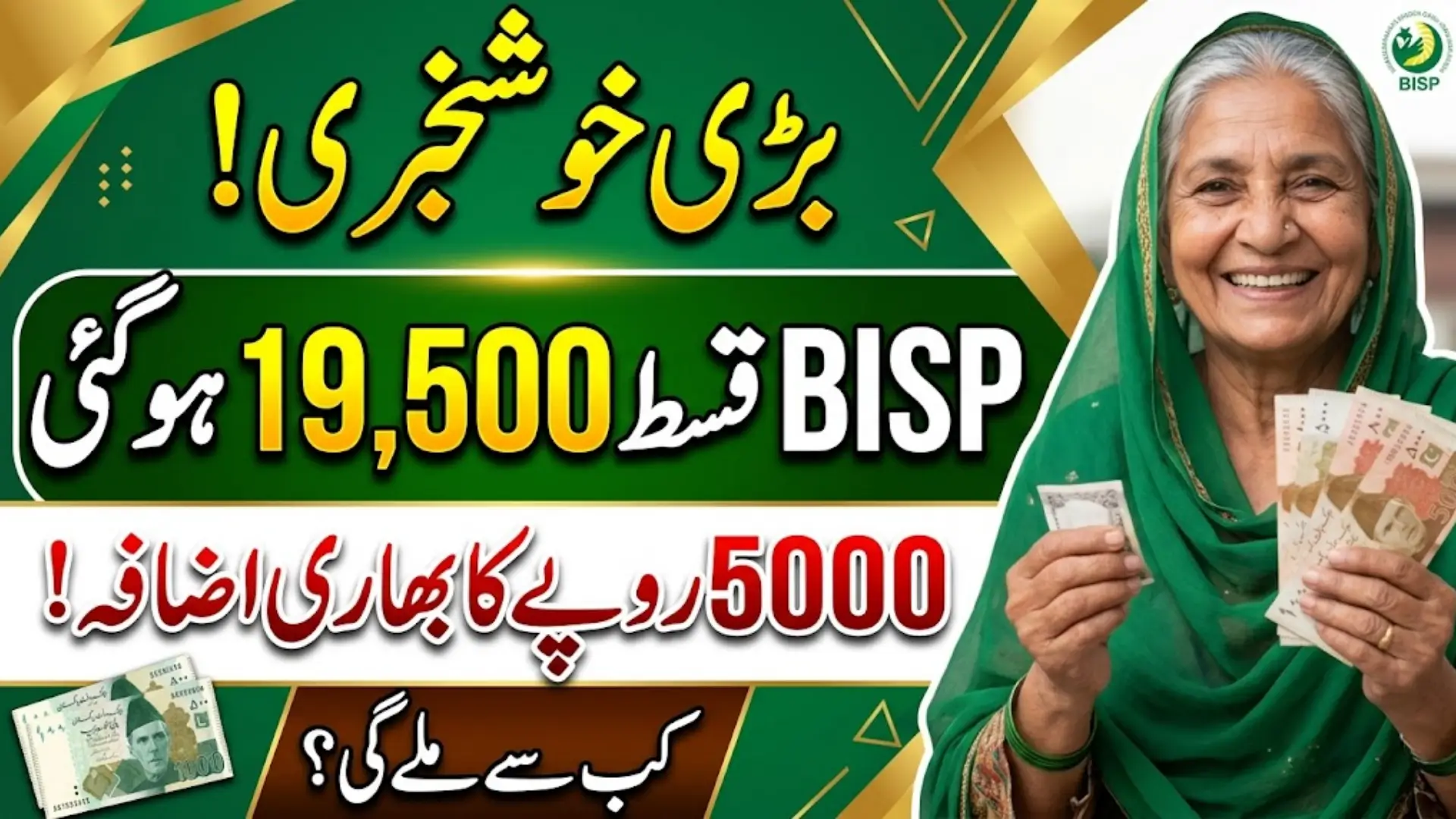
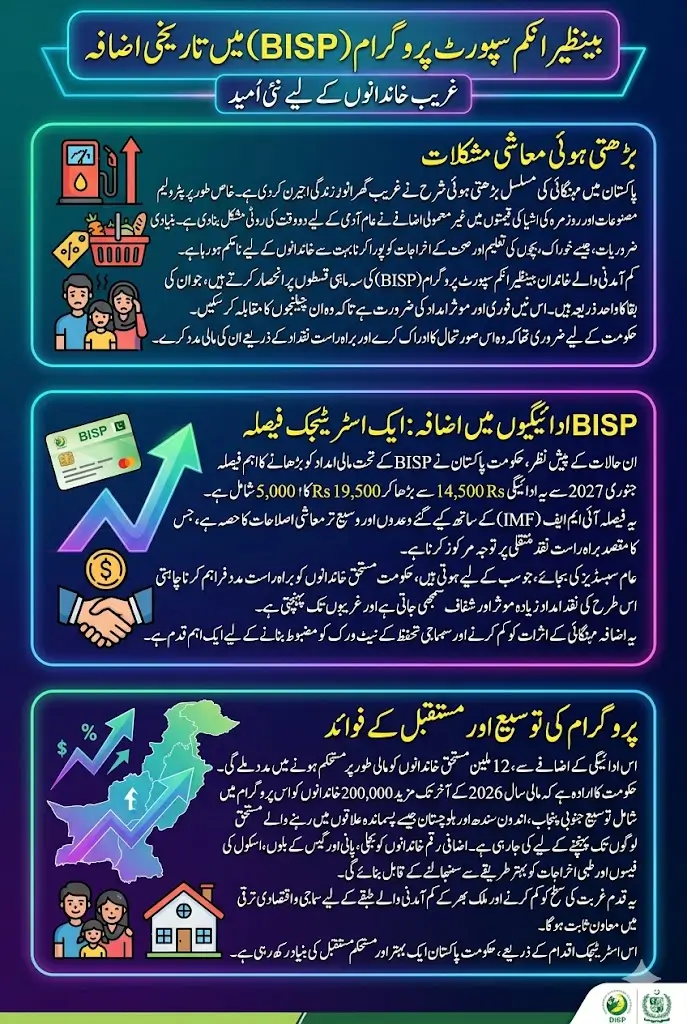
Big Relief for Poor Families Benazir Income Support Program Payment Government of Pakistan has taken a major decision that is expected to bring real relief to millions of low-income households across the country. According to official discussions and policy direction, the financial assistance under the Benazir Income Support Program (BISP) will be increased from Rs 14,500 to Rs 19,500 starting from January 2027. This Rs 5,000 increase is not just a routine adjustment, but a significant step in response to rising inflation, increasing fuel prices, and the overall cost of living that has made survival difficult for many families.
From a ground-level perspective, this move directly targets those families who rely on quarterly BISP payments for basic survival. In rural areas and small cities, many households depend heavily on this financial support to manage food, school expenses, and medical needs. With prices of essential items continuously rising, this increase is being seen as a necessary and timely intervention to reduce financial pressure on the poorest segments of society.
You Can Also Read: United Motorcycles Price Update 2026
Why Government Increased BISP Payment in Pakistan
This decision is part of a broader economic strategy shaped in consultation with the International Monetary Fund. The government has committed to reducing untargeted subsidies, especially on petroleum products, and instead focusing on direct cash assistance for deserving families. This shift is important because general subsidies often benefit all income groups, while targeted programs like BISP ensure that only the most deserving people receive financial support.
In recent months, Pakistan has faced increasing economic challenges, including inflation, currency pressure, and rising import costs. In such a situation, direct cash transfers through BISP are considered more effective and transparent. The government has also assured international partners that it will continue expanding social protection programs to support vulnerable communities.
Key reasons behind this increase include:
- Continuous rise in inflation and daily living expenses in Pakistan
- Commitment to policy reforms agreed with the IMF
- Shift from general subsidies to targeted financial assistance
- Need to strengthen social safety nets for low-income groups
- Increasing pressure on households due to fuel and utility costs
You Can Also Read: Maryam Nawaz Free Transport Service
BISP Beneficiaries to Reach 12 Million Families
Along with increasing the payment amount, the government has also decided to expand the number of families included in the program. By the end of the fiscal year 2026, an additional 200,000 families will be added, bringing the total number of beneficiaries to around 12 million. This expansion reflects the growing need for financial support as more families fall below the poverty line due to economic challenges.
In many areas, especially in South Punjab, interior Sindh, and parts of Balochistan, people are still waiting to be included in BISP despite being eligible. This new expansion will help include such deserving households and ensure wider coverage. The government has also given assurance that the number of beneficiaries will continue to increase in the coming years, depending on available resources and economic conditions.
This step will help:
- Include newly identified deserving families
- Expand financial coverage across rural and urban areas
- Reduce poverty levels gradually
- Improve access to basic necessities for more households
Petroleum Prices, IMF Conditions and Economic Strategy
One of the most important factors behind this decision is the government’s policy regarding petroleum prices. Authorities have decided that fuel prices will remain linked to the global market, which means there will be no large-scale subsidies on petrol and diesel. Instead, the government is encouraging provinces to provide targeted relief to low-income groups from their own budgets.
This policy shift is directly connected with IMF requirements, where Pakistan has committed to reducing fiscal deficits and improving financial discipline. Recently, petrol consumption in the country increased by around 24 percent, which shows that demand remains high despite rising prices. At the same time, the government has collected additional revenue through petroleum levies, which plays a role in funding social welfare programs like BISP.
You Can Also Read: Sindh Petrol Subsidy Portal Down? Rs 2000 Registration
Important points regarding this strategy:
- Petrol prices will follow international market trends
- No blanket subsidy on petroleum products
- Provinces will provide targeted relief where possible
- Government is focusing on sustainable financial planning
- Additional revenue collection supports welfare programs
Relief for Farmers: No FED on Fertilizers
While tightening policies in some sectors, the government has also taken a positive step to support farmers. It has been decided that Federal Excise Duty (FED) will not be imposed on fertilizers in the next financial year. This decision is extremely important because agriculture remains the backbone of Pakistan’s economy, and increasing input costs can directly affect food production.
Farmers across the country, especially small landowners, have been facing difficulties due to rising costs of seeds, fertilizers, and fuel. By removing FED on fertilizers, the government aims to reduce their financial burden and ensure stable crop production. This will not only benefit farmers but also help control food prices for the general public.
Benefits of this decision include:
- Lower cost of fertilizers for farmers
- Reduced overall farming expenses
- Support for small and medium-scale farmers
- Stability in agricultural production
- Better food supply management across Pakistan
You Can Also Read: BISP 8171 Update NADRA Facial Verification Now Required
New BISP Payment Structure from January 2027
The most important update for beneficiaries is the new payment structure that will be implemented from January 2027. Each eligible family under the Benazir Income Support Program will receive Rs 19,500 instead of the current Rs 14,500. This increase is expected to significantly improve the financial condition of families who rely on this support for survival.
From a practical point of view, this additional amount will help households better manage their monthly budgets. Many families use BISP payments for essential needs such as groceries, school fees, and healthcare expenses. With an extra Rs 5,000, they will have slightly more financial flexibility to handle unexpected costs and emergencies.
BISP Payment Increase Overview
| Year | Payment Amount | Increase | Beneficiary Families |
|---|---|---|---|
| 2026 | Rs 14,500 | — | 11.8 Million |
| 2027 | Rs 19,500 | +Rs 5,000 | 12 Million |
This increase will help families manage:
- Daily household expenses more easily
- Children’s education and school-related costs
- Medical treatment and emergency needs
- Rising food prices and utility bills
What This Decision Means for Pakistani Families
For an ordinary Pakistani family, especially those living in villages or low-income urban areas, this decision brings a sense of hope. Over the past few years, inflation has reduced the purchasing power of people, making it difficult to even afford basic necessities. In such conditions, government support programs like BISP play a crucial role in survival.
From what can be observed on the ground, many women depend on this program as their only source of income. The increase in payment and expansion of beneficiaries will not only provide financial relief but also improve their confidence and stability. It shows that the government is focusing on practical solutions to address poverty and economic hardship.
You Can Also Read: Solar Policy Pits Govt Against Public