


Punjab Biodiversity Corridors Establishment
Punjab Biodiversity Corridors Establishment Punjab is passing through a difficult environmental phase where rising smog, increasing temperatures, and rapid urban expansion are affecting everyday life. In major cities, concrete structures are replacing natural spaces, leaving very little room for greenery to survive. This situation is not only damaging the environment but also impacting public health, especially for children and elderly people.
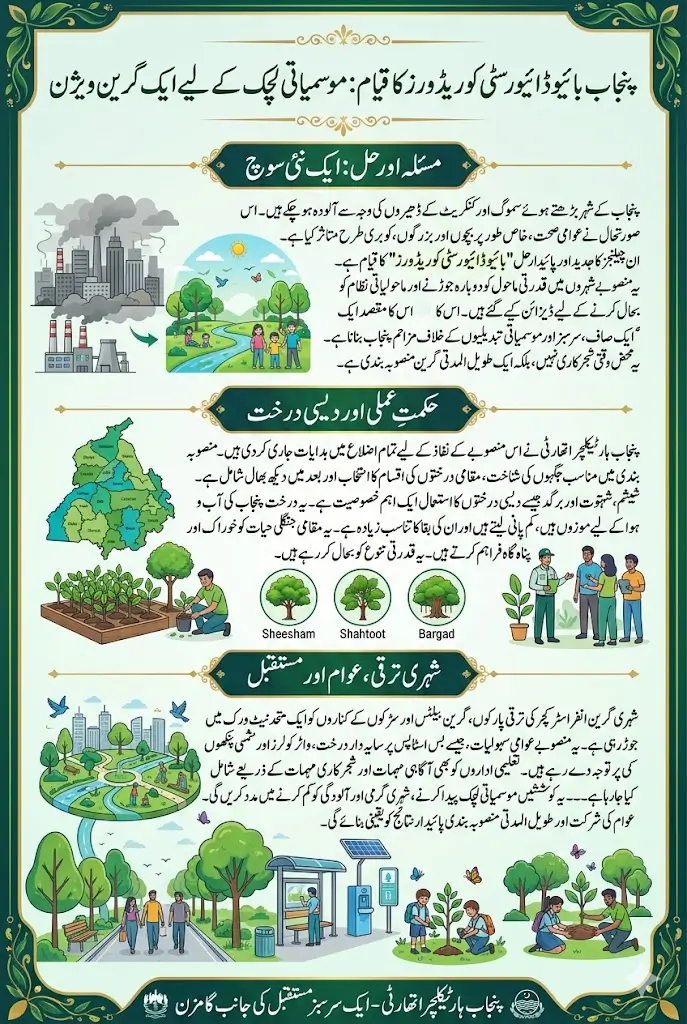
In response to these challenges, the government has introduced the concept of biodiversity corridors, a modern and practical solution that is already being used in many developed regions of the world. These corridors are designed to reconnect nature within cities, allowing ecosystems to recover and function properly. This initiative is part of a broader vision to make Punjab cleaner, greener, and more climate-resilient.
From what can be observed on the ground, authorities are now shifting their focus from temporary plantation drives to long-term environmental planning. Instead of planting trees randomly, they are working on structured green networks that can deliver sustainable results over time.
- Addresses smog and environmental degradation in urban areas
- Focuses on long-term climate resilience instead of short-term fixes
- Aims to restore balance between urban development and nature
You Can Also Read: Government Announces Fuel Support Package
Understanding Biodiversity Corridors in Urban Areas
Biodiversity corridors can be understood as green pathways that connect different natural habitats within cities. In simple language, these are continuous strips of vegetation that allow birds, insects, and small animals to move freely without disruption. In cities where natural areas are divided by roads and buildings, these corridors act as lifelines for biodiversity.
When observing urban environments, it becomes clear that isolated green patches are not enough to sustain wildlife. Without connection, these areas become weak and unable to support ecological systems. Biodiversity corridors solve this issue by linking parks, green belts, and roadside plantations into a unified network.
These corridors also play a major role in improving environmental quality. They help in pollination, control pests naturally, and contribute to better air circulation. Over time, such systems help cities maintain ecological balance even as they continue to grow.
- Connect broken habitats across urban areas
- Support movement of pollinators and wildlife
- Improve ecological balance and natural processes
You Can Also Read: Peshawar Class 11 Board Announces Exam Dates
Role of Punjab Horticulture Authority in the Initiative
The Punjab Horticulture Authority has taken a central role in implementing this initiative across different districts. Instead of limiting efforts to a few major cities, directions have been issued to all district horticulture agencies to actively participate in the development of biodiversity corridors. This ensures that the impact is widespread and not restricted to selected areas.
Field observations show that authorities are focusing on proper planning, including identifying suitable locations, selecting appropriate plant species, and ensuring maintenance after plantation. This structured approach increases the chances of success compared to previous campaigns where follow-up was often missing.
The leadership has also emphasized coordination between departments so that plantation, landscaping, and public facility development can be carried out together. This integrated method is expected to deliver better and faster results.
- District-level implementation for wider coverage
- Focus on planning, execution, and maintenance
- Coordination between multiple government departments
You Can Also Read: KP Govt Announces Tax Relief For One Month
Plantation Strategy Using Native Tree Species
A key feature of this project is the use of native tree species such as sheesham, shahtoot, and bargad. These trees are naturally suited to Punjab’s climate, which means they can survive extreme temperatures and require less water compared to imported species. This makes them a practical and cost-effective choice for large-scale plantation.
From an environmental perspective, native trees offer far greater benefits. They support local wildlife by providing food and shelter, and they grow in harmony with the surrounding ecosystem. Unlike exotic plants, they do not disturb the natural balance of the area.
In many parts of Punjab, people have already noticed that traditional trees attract more birds and insects. By reintroducing these species on a large scale, the government is not only increasing green cover but also reviving natural biodiversity that has been declining for years.
- High survival rate in local climate conditions
- Provide natural habitat for birds and insects
- Require less maintenance and water
Enhancing Urban Green Infrastructure
The development of biodiversity corridors is closely linked with improving urban green infrastructure. Authorities are not only planting trees but also creating new green spaces such as parks, landscaped areas, and roadside plantations. This comprehensive approach ensures that greenery becomes a permanent part of urban planning.
In densely populated cities, lack of green spaces often leads to higher temperatures and poor air quality. By increasing vegetation cover, these problems can be reduced significantly. Trees provide shade, absorb pollutants, and help regulate temperature, making cities more comfortable for residents.
On-ground developments indicate that these green projects are being planned in a way that they connect with each other. Instead of isolated parks, the focus is on creating a network that supports both environmental and social needs.
- Expansion of parks and green belts
- Reduction in urban heat and pollution
- Integration of greenery into city planning
You Can Also Read: GWM Tank 500 Price in Pakistan Reviews & Specs
Public-Friendly Green Facilities Development
One noticeable aspect of this initiative is its focus on public convenience. Authorities have planned to plant shady trees at bus stops and public waiting areas, which will provide immediate relief to people, especially during hot summer months. In cities like those in Punjab, where temperatures can rise sharply, such steps can make a significant difference in daily life.
In addition to tree plantation, facilities such as water coolers and solar-powered fans are being introduced. These measures not only improve public comfort but also promote the use of renewable energy. It reflects a practical approach where environmental protection and public service go hand in hand.
This type of development shows that the initiative is not limited to environmental benefits alone but also considers the needs of ordinary citizens who interact with these spaces every day.
- Shady tree plantation at public points
- Installation of water coolers for public use
- Solar-powered systems to reduce energy costs
You Can Also Read: Gilgit-Baltistan Motorway Project Route & Completion
Educational Institutions as Climate Partners
Educational institutions are being actively involved in this initiative to ensure long-term impact. Schools and colleges are being encouraged to organize awareness campaigns so that students understand the importance of environmental protection from an early age.
Plantation drives within educational institutions are also being promoted. These activities not only increase green cover but also create a sense of responsibility among students. When young people participate in such efforts, they are more likely to adopt eco-friendly habits in their daily lives.
From a broader perspective, involving educational institutions helps build a culture where environmental care becomes a shared responsibility rather than just a government task.
- Awareness campaigns in schools and colleges
- Student participation in plantation drives
- Promotion of eco-friendly habits among youth
Combating Smog and Air Pollution in Punjab
Smog has become a serious issue in Punjab, affecting millions of people every year. Biodiversity corridors offer a natural solution to this problem by increasing the number of trees and plants that can absorb harmful pollutants from the air. Over time, this can lead to noticeable improvements in air quality.
Trees act as natural filters by trapping dust and absorbing gases like carbon dioxide. With a proper network of greenery, cities can reduce pollution levels and create a healthier environment. This initiative is part of a larger strategy to tackle air pollution through sustainable methods rather than temporary measures.
Authorities have also linked this project with other environmental policies, ensuring that efforts are aligned and focused on achieving long-term results.
- Reduction in air pollution through increased greenery
- Natural absorption of harmful gases
- Contribution to healthier living conditions
You Can Also Read: Punjab Public Safety App Simple Steps To Register
Community Engagement and Environmental Awareness
The success of biodiversity corridors largely depends on public participation. Without community support, it becomes difficult to maintain green spaces and ensure their long-term survival. For this reason, awareness campaigns are being launched to educate people about the importance of protecting the environment.
Citizens are being encouraged to take part in plantation activities and care for the trees in their surroundings. When people feel connected to these projects, they are more likely to protect and maintain them.
From a practical viewpoint, community involvement also reduces the burden on government agencies and creates a sense of ownership among the public.
- Public participation in plantation drives
- Awareness about environmental protection
- Shared responsibility for maintaining green spaces
Long-Term Impact on Climate Resilience
Biodiversity corridors are designed to provide long-term benefits rather than immediate results. By strengthening ecosystems, they help cities adapt to changing climate conditions such as heatwaves and irregular rainfall. This makes urban areas more resilient and better prepared for future challenges.
Over time, these corridors can transform the way cities function by integrating nature into urban life. They support sustainable development by ensuring that growth does not come at the cost of environmental damage.
The long-term vision behind this initiative is to create cities where development and nature coexist in a balanced way, ensuring a better quality of life for future generations.
- Helps cities adapt to climate change
- Strengthens natural ecosystems
- Supports sustainable urban development
You Can Also Read: Change Profession Pakistani Passport Simple Process Explained 2026
Key Environmental Benefits of Biodiversity Corridors
| Aspect | Current Situation in Cities | Expected Improvement |
|---|---|---|
| Air Quality | High pollution and smog | Cleaner air with more oxygen |
| Green Cover | Limited and scattered | Increased and connected greenery |
| Wildlife Activity | Minimal presence | Improved habitat and movement |
| Urban Temperature | Higher heat levels | Cooler environment due to trees |
Conclusion
The establishment of biodiversity corridors is a significant step toward addressing Punjab’s environmental challenges in a structured and sustainable way. It reflects a shift from short-term actions to long-term planning, which is essential for dealing with complex issues like climate change and urban pollution.
From what is being observed, this initiative has the potential to transform cities into healthier and more livable spaces. However, its success will depend on consistent implementation and active participation from the public. If both government and citizens work together, Punjab can move closer to achieving a cleaner, greener, and more sustainable future.
You Can Also Read: Pak Suzuki Bike Installment Plan Available