
Sindh Disbursed Millions In Subsidies
Sindh Disbursed Millions In Subsidies Government of Sindh has stepped forward with a targeted fuel subsidy scheme to support transporters who have been struggling due to continuous increases in fuel prices. In recent months, petrol and diesel costs have risen sharply, directly affecting goods transporters, bus operators, and daily wage drivers. This increase has not only raised transportation costs but has also impacted the prices of essential goods across Pakistan.
From a ground-level perspective, many transporters have been finding it difficult to maintain operations. Small vehicle owners, especially those running on tight daily incomes, were the most affected. This subsidy scheme aims to reduce their burden and ensure that transport services continue without disruption. The initiative reflects the government’s effort to stabilize the transport sector and provide financial relief where it is needed the most.
You Can Also Read: Sindh Government Announced New Digital System
Progress Update on Subsidy Distribution
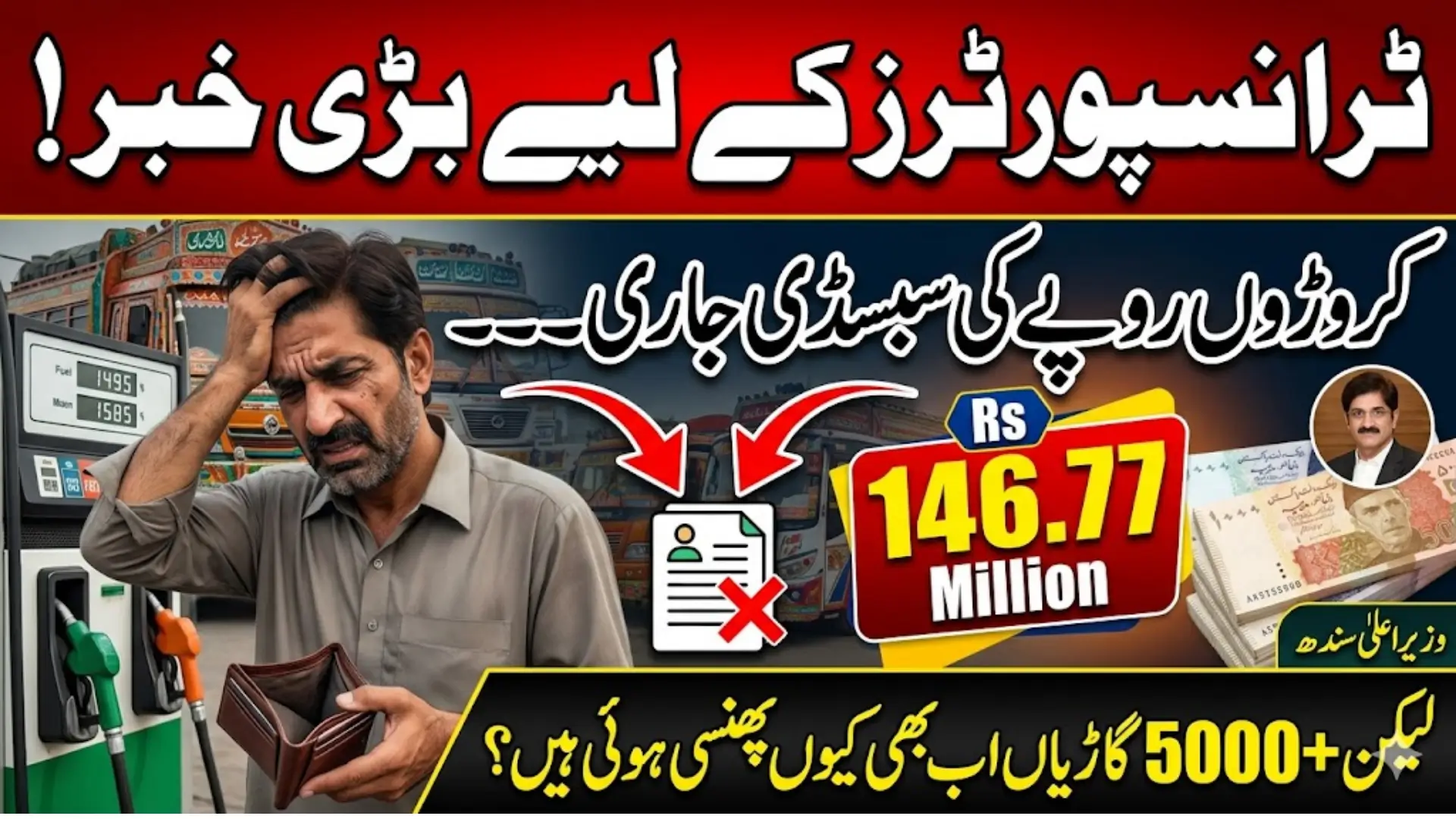
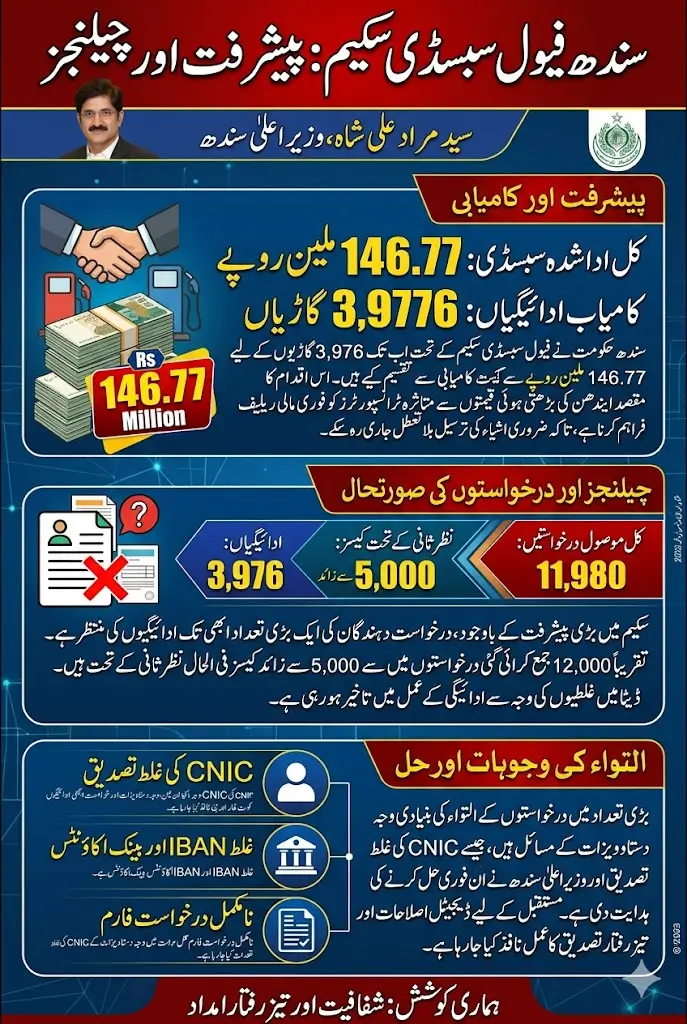
The latest update shared by the Sindh government shows that significant progress has been made in disbursing funds under the fuel subsidy scheme. So far, Rs146.77 million has been distributed among eligible transporters, covering 3,976 vehicles. This indicates that the program is operational and payments are being processed, though not at the desired speed.
Despite this progress, a large number of applicants are still waiting for their payments. This delay has raised concerns among transporters who depend on this financial support to manage their daily fuel expenses. The government has acknowledged these concerns and is working to improve the pace of distribution.
Key progress points include:
- Total subsidy disbursed has reached Rs146.77 million
- 3,976 vehicles have successfully received payments
- Thousands of applicants are still awaiting approval
- Payment process is ongoing but requires acceleration
You Can Also Read: LUMHS Introduces Free Electric Buses
Eligibility Data and Vehicle Registration Status
The response to the subsidy scheme has been strong, with 11,980 vehicles submitted for eligibility verification. This includes both goods transport vehicles and public service vehicles operating across Sindh. The high number of applications reflects the widespread need for financial support in the transport sector.
However, only a portion of these applications has been successfully processed so far. A significant number remains under review, mainly due to data-related issues. This gap between submitted and approved applications highlights the importance of accurate information and proper documentation.
| Category | Details |
|---|---|
| Total Vehicles Applied | 11,980 |
| Vehicles Approved | 3,976 |
| Cases Under Review | 5,000+ |
| Total Subsidy Paid | Rs146.77 Million |
Reasons Behind Pending Applications
One of the biggest challenges facing the scheme is the large number of pending applications. More than 5,000 cases are currently under review بسبب various documentation and data issues. These delays are not due to lack of funds but rather due to errors in the application process.
In many cases, applicants have submitted incorrect or incomplete information. Even small mistakes, such as a mismatch in CNIC details or missing bank account numbers, can delay the entire process. Authorities are now rechecking these applications, which is taking additional time.
Common reasons for delays include:
- CNIC mismatches during verification
- Missing or incorrect IBAN details
- Incomplete application forms
- غلط ڈیٹا انٹری یا نامکمل معلومات
- عدم تصدیق شدہ بینک اکاؤنٹس
These issues clearly show that awareness and proper guidance for applicants are essential to avoid delays in future.
You Can Also Read: Transport Terminals Shut Down in Islamabad and Rawalpindi
Government Response to Delays
Sindh Chief Minister Syed Murad Ali Shah has taken serious notice of the delays and directed all concerned departments to resolve issues immediately. He emphasized that the purpose of the scheme is to provide relief, and any delay reduces its effectiveness.
According to directions given in the review meeting, departments have been asked to prioritize pending cases and ensure that eligible transporters receive their payments without further delay. The government is also focusing on improving the verification process to avoid repeated errors.
Important directives include:
- Immediate resolution of data-related issues
- Faster verification and approval process
- Strict monitoring of pending applications
- Ensuring transparency and accountability
You Can Also Read: 750 Prize Bond List 16 April 2026 Full Details
Role of Interdepartmental Coordination
The success of this subsidy program largely depends on effective coordination between multiple departments. The transport department, excise department, and federal authorities are all involved in the verification and approval process. Any lack of communication between these departments can lead to unnecessary delays.
Efforts are now being made to improve coordination so that data can be verified quickly and accurately. This includes sharing information in real-time and aligning procedures across departments. Improved coordination will not only speed up the current process but will also make future programs more efficient.
Key coordination improvements include:
- Strong collaboration between provincial and federal authorities
- Better data sharing between departments
- Streamlined verification procedures
- Joint monitoring of progress
You Can Also Read: Punjab Traffic Fines Reduced 2026 Big Relief
Digital Transformation in Transport Sector
The Sindh government has also highlighted major digital reforms aimed at improving the transport system. These reforms are designed to reduce manual errors, increase transparency, and ensure that processes are completed quickly and efficiently.
Automation is being introduced in vehicle inspections and transport authority systems. These systems are also being integrated with other departments, including traffic police and motorway authorities. This digital shift is expected to play a key role in improving the overall efficiency of the subsidy scheme.
Major digital initiatives include:
- Automation of motor vehicle inspection processes
- Digitization of Provincial and Regional Transport Authorities
- Integration with Excise Department databases
- Linking systems with Traffic Police and Motorway Police
- Use of technology to ensure transparency and efficiency
Key Officials and Stakeholders Involved
The review meeting was attended by several senior officials, including transport and excise ministers, secretaries, and other high-ranking authorities. Their involvement shows that the government is closely monitoring the situation and is committed to resolving issues.
Each department has a clear role in the implementation of the scheme. From data verification to payment processing, every step requires careful handling. Strong leadership and accountability are essential to ensure that the scheme achieves its objectives.
The presence of top officials also indicates that the issue is being handled on a priority basis, which is a positive sign for applicants waiting for their payments.
You Can Also Read: Electricity Load Shedding Pakistan
Future Outlook of the Subsidy Program
Looking ahead, the government aims to clear all pending applications as soon as possible. Efforts are being made to fix data issues and improve the verification system so that payments can be released quickly.
If these improvements are successfully implemented, the scheme can provide long-term benefits to the transport sector. It can also serve as a model for other provinces looking to support their transport industries during economic challenges.
Future expectations include:
- Faster processing of pending applications
- Improved data accuracy in new applications
- Enhanced digital systems for verification
- Continued financial support for transporters
Conclusion
The Sindh fuel subsidy scheme has already provided financial relief to thousands of transporters, but challenges remain. Delays caused by data errors and verification issues have slowed down the process, affecting many applicants.
However, the government’s active response and focus on digital reforms offer hope for improvement. With better coordination and accurate data submission, the scheme can achieve its full potential and provide timely support to those who need it most