


Electricity Load Shedding Pakistan
Electricity Load Shedding Pakistan Today Electricity load shedding has once again become a major national issue as summer heat intensifies across Pakistan. In cities like Lahore, the situation is becoming increasingly difficult for ordinary citizens who are already struggling with inflation and high utility bills. The sudden rise in temperature has sharply increased electricity consumption, especially during daytime and evening hours when fans, air coolers, and other appliances are used continuously. This growing demand is putting immense pressure on the power system, which is already operating near its limits.
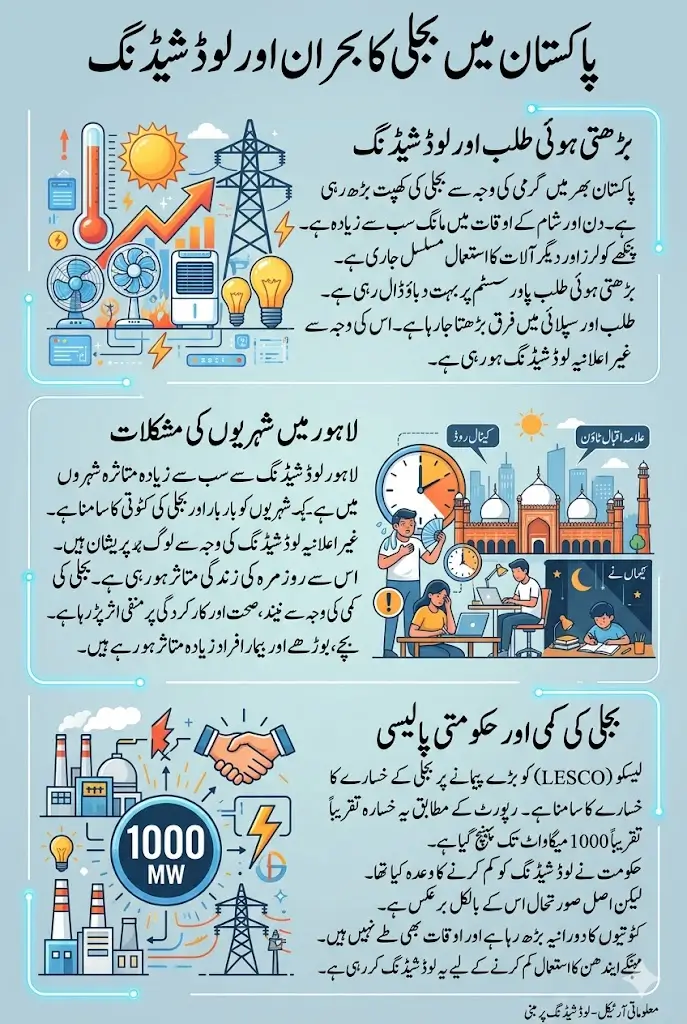
From what is being observed on the ground, the gap between electricity demand and supply is widening day by day. The situation is not limited to one city but is affecting multiple regions. However, Lahore has emerged as one of the worst-hit areas where people are facing frequent and prolonged outages. The biggest concern is that these power cuts are mostly unannounced, which creates frustration and disrupts daily life routines.
You Can Also Read: State Bank Of Pakistan Permits Banking
- Electricity demand has increased due to rising temperatures
- Power generation is not enough to meet current needs
- Urban areas like Lahore are facing severe pressure
- Unscheduled outages are creating uncertainty among citizens
Unannounced Load Shedding Breaks Government Promise
Recently, the government had assured the public that electricity load shedding would be limited to around 2.25 hours daily during peak hours between 5 pm and 1 am. This announcement was meant to provide relief and build confidence among citizens. Many people adjusted their daily routines based on this expectation, believing that power cuts would remain controlled and predictable.
However, the real situation has turned out to be very different. In several areas, power outages are happening multiple times a day and often last much longer than promised. In some cases, electricity is also being cut outside the announced peak hours. This clear difference between official statements and actual ground conditions has raised serious concerns among the public, as trust in the system begins to weaken.
- Government promised limited load shedding during peak hours
- Actual outages are longer and more frequent
- Power cuts are also occurring outside announced timings
- Public confidence is being affected due to mismatch
You Can Also Read: Will Petrol Also Be Cheaper? Big Update
Lahore Residents Facing Continuous Power Interruptions
Lahore residents are experiencing one of the toughest phases of load shedding in recent times. Many households have reported that electricity is being cut every 30 to 60 minutes, making it almost impossible to carry out daily activities smoothly. From running basic home appliances to managing work-from-home tasks, everything is being disrupted due to inconsistent power supply.
A real example comes from Singhpura, where a resident shared that electricity outages continued throughout the night until early morning hours. Such conditions are becoming increasingly common across different parts of the city. The absence of electricity during hot nights not only causes discomfort but also affects sleep, health, and productivity. For families with children and elderly members, the situation becomes even more difficult.
- Frequent outages occurring within short intervals
- Night-time load shedding affecting sleep quality
- Daily household activities are being disturbed
- Health issues increasing due to heat and lack of electricity
You Can Also Read: NADRA New Job Openings in April 2026
Lesco Shortfall Reaches Critical Level
The main reason behind this worsening situation is the growing electricity shortfall faced by Lesco. According to reports, the shortfall has surged to around 1,000 megawatts, which is a significant gap that cannot be easily managed. When demand rises beyond supply, distribution companies are left with no option but to implement load shedding across different areas.
This shortfall is mainly driven by increased electricity usage and limited generation capacity. As more people rely on cooling appliances during hot weather, the demand spikes sharply, especially in urban areas. Lesco’s system is under heavy stress, and this is directly reflected in the increasing duration and frequency of power outages across Lahore.
- Shortfall has reached approximately 1,000 MW
- Demand is increasing faster than supply
- Load management is being used to balance the system
- Urban consumption is putting extra pressure on the grid
You Can Also Read: 750 Prize Bond List 2026 Quetta 15 April Check
Areas Most Affected by Load Shedding in Lahore
Different areas in Lahore are experiencing varying levels of load shedding depending on their electricity demand and grid conditions. Some areas are facing shorter outages, while others are dealing with power cuts lasting up to seven hours daily. This uneven distribution is creating a sense of imbalance among residents, as some localities suffer more than others.
According to available information, areas such as Allama Iqbal Town, Canal Road, Mustafa Town, Shah Kamal, Airport Road, Guldasht Town, Baghbanpura, Data Nagar, Shahbagh, Barki, and Sahafi Colony are among the most affected. The duration of load shedding in these areas can change daily based on system load and electricity availability.
| Area / Location | Estimated Daily Load Shedding | Situation Type |
|---|---|---|
| Allama Iqbal Town | 3–5 Hours | Moderate to High |
| Canal Road | 2–4 Hours | Moderate |
| Mustafa Town | 4–6 Hours | High |
| Baghbanpura | 5–7 Hours | Severe |
| Airport Road | 3–6 Hours | High |
| Barki / Sahafi Colony | 4–7 Hours | Severe |
- Some areas face up to 7 hours of load shedding
- High-demand zones experience longer outages
- Daily schedules are not consistent
- Situation varies depending on electricity load
You Can Also Read: Free Bus Service on 7 Routes In Attock Good News
Government Strategy Behind Controlled Load Shedding
The government has stated that this load shedding is part of a broader strategy aimed at controlling electricity production costs. Generating electricity using expensive fuels can lead to a significant increase in electricity tariffs, which would further burden the public. To avoid this, controlled load shedding is being implemented, especially during peak hours.
While this policy may help in managing economic pressure at a national level, it is creating difficulties for the public. Many citizens believe that better planning and improved communication could reduce the negative impact of such measures. The challenge lies in balancing economic needs with public convenience.
- Strategy aims to reduce use of expensive fuel
- Helps control potential increase in electricity tariffs
- Public is facing inconvenience due to load management
- Better planning is needed for effective implementation
Cities Excluded from the Current Power Cut Plan
Interestingly, not all cities are experiencing the same level of load shedding under this plan. Areas served by K-Electric and Hesco, such as Karachi and Hyderabad, have been excluded from this specific policy. This is mainly because these regions operate under different electricity distribution systems.
This exclusion has led to discussions among citizens in other parts of the country, particularly in Punjab, where load shedding is more severe. Many people are questioning why there is a difference in policy implementation and whether a uniform system could be more effective.
- Karachi and Hyderabad are not part of this plan
- Different distribution systems operate in these cities
- Other regions are facing higher load shedding
- Policy differences are raising public questions
You Can Also Read: SNGPL Restricted Gas Supply To Six Hours
Official Load Management Plan and Its Limitations
Lesco has officially shared a load management schedule, which is available on its website. According to this schedule, specific areas are supposed to face electricity outages at fixed times during the day. This system is designed to provide some level of predictability to consumers.
However, in reality, many residents report that actual power cuts do not follow the announced schedule. Unexpected outages and extended durations are common complaints. This mismatch makes it difficult for people to plan their daily routines, especially those who rely on electricity for work or business.
- Official schedule is available but not fully followed
- Unexpected outages are common
- Timing inconsistencies create confusion
- Planning daily activities becomes difficult
Public Reaction and Growing Concerns
The public response to the current load shedding situation has been strongly negative. Citizens across Lahore and other cities are expressing frustration due to the lack of clear communication and increasing outage duration. Social discussions and local reports show that people are demanding better management and transparency.
Many believe that if accurate schedules were provided and followed strictly, the situation could be handled more effectively. Instead, sudden outages are creating stress and affecting productivity. The ongoing situation is also raising concerns about how the system will perform in the coming peak summer months.
- Public frustration is increasing rapidly
- Demand for transparency and clear schedules
- Sudden outages causing stress and inconvenience
- Concerns about worsening situation in future
Possible Impact if Power Crisis Continues
If the current electricity crisis continues, its impact could be felt across multiple sectors. Small businesses, shops, and home-based workers are already facing losses due to frequent power cuts. Students are also struggling to focus on studies in hot conditions without electricity.
In addition, many households may turn towards alternative energy solutions such as generators and solar panels. While these options provide relief, they also come with additional costs, which may not be affordable for everyone. This could further increase financial pressure on middle and lower-income families.
- Businesses facing operational losses
- Students and workers are affected
- Increased reliance on alternative energy sources
- Financial burden on households may rise
What Citizens Can Expect in the Coming Days
Looking at the current situation, it is likely that load shedding will continue in the coming days, especially if temperatures keep rising. The electricity demand is expected to increase further, which may put additional pressure on the already strained system.
Citizens are advised to manage electricity usage wisely and stay updated with official announcements. Until a stable balance between supply and demand is achieved, this situation may persist. Long-term solutions are needed, but for now, people will have to adjust to ongoing challenges.